
The Sticky Truth: The Cons of Epoxy Flooring
At Innovative Concrete Solutions, we believe choosing the right floor starts with transparency. Epoxy flooring is often praised for its shiny finish and industrial strength, but marketing hype doesn’t always tell the full story. Before committing to epoxy, it’s important to look beyond the surface and understand what daily use, climate, and time can reveal. This closer look at the cons of epoxy helps homeowners and business owners avoid unexpected costs and frustrations later on.
Installation Is More Complicated Than It Looks
Epoxy flooring demands precision from start to finish. The concrete must be thoroughly cleaned, ground, repaired, and completely dry before any coating is applied. Even small amounts of moisture or dust can cause bonding issues. Once the epoxy is mixed, installers have a limited working time before it begins to cure. Temperature and humidity must remain consistent throughout the process, which can stretch installation over several days. For busy homes or commercial spaces, this extended downtime is one of the most frustrating cons of epoxy.
Strong Odors Create Indoor Disruptions
Epoxy coatings release powerful chemical fumes during application and curing. These odors can linger and quickly overwhelm indoor environments, especially in enclosed spaces. Proper ventilation is essential, and in many cases, occupants must leave the building entirely. According to the U.S. Environmental Protection Agency, exposure to certain volatile organic compounds can impact indoor air quality and comfort. For businesses, this disruption often means lost productivity or temporary closures.
Temperature Sensitivity Can Lead to Cracking
Epoxy does not adapt well to fluctuating temperatures. In regions that experience seasonal changes, expansion and contraction of the concrete slab can cause epoxy to crack or delaminate. This is particularly common in garages, warehouses, and facilities without climate control. Moisture vapor rising through the slab can also compromise adhesion over time. These environmental limitations are key cons of epoxy that are frequently overlooked during the decision-making process.
Sunlight Causes Discoloration Over Time
Epoxy flooring is not UV-stable. When exposed to sunlight, it can yellow, fade, or lose its glossy appearance. This is especially noticeable near windows, bay doors, or entryways. Once discoloration occurs, repairs are rarely seamless and often require full resurfacing. For property owners who value long-term appearance, this visual degradation can become a major disappointment.
Slippery Surfaces Increase Safety Risks
While epoxy floors look sleek, that smooth finish can become dangerously slippery when wet. Water, spills, or cleaning residue can create hazardous conditions. Anti-slip additives are available, but they alter the finish and can increase maintenance needs. In commercial settings, slip hazards raise liability concerns and may conflict with workplace safety recommendations outlined by organizations like OSHA.
Durability Has Its Limits in High-Traffic Areas
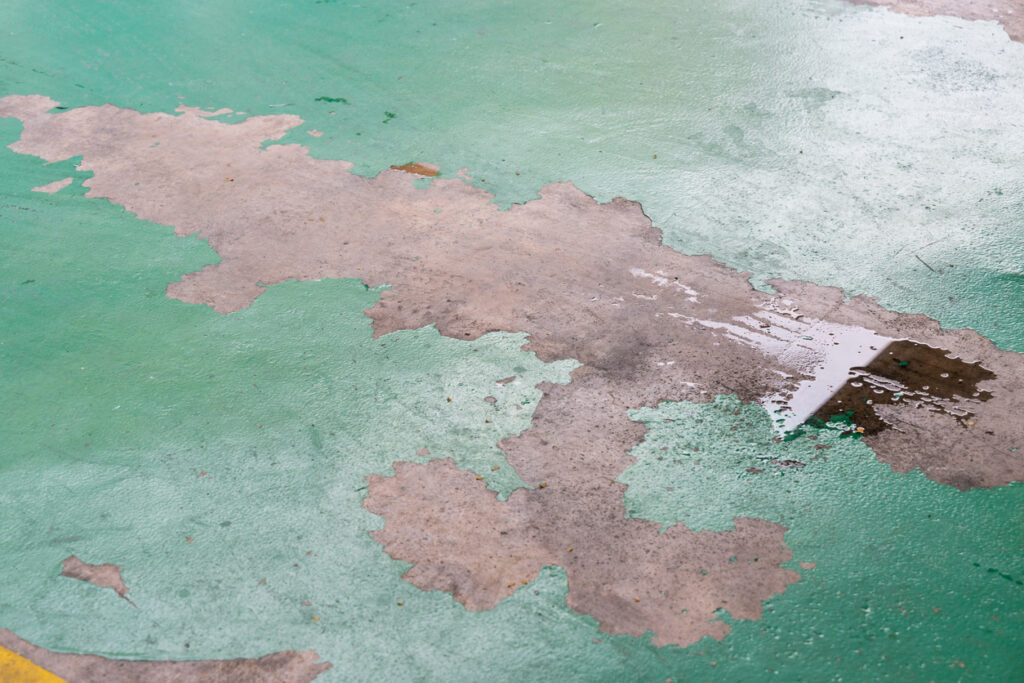
Despite its reputation, epoxy is not immune to wear and impact damage. Dropped tools, heavy equipment, and constant vehicle traffic can lead to chipping or peeling. Once the surface is compromised, moisture can seep underneath and cause larger failures. Repairs are often visible and uneven, which diminishes both function and appearance. Over time, this ongoing upkeep becomes one of the most costly cons of epoxy.
Environmental Impact Is Worth Considering
Epoxy coatings are petroleum-based and difficult to recycle. Their production and disposal contribute to environmental concerns that matter to many modern property owners. As sustainability becomes a priority in construction and renovation, materials with a lower environmental footprint are gaining traction. Resources from organizations like the U.S. Environmental Protection Agency continue to encourage more eco-conscious building decisions.
Frequently Asked Questions About Epoxy Flooring
Q. How long does epoxy flooring last?
A. In low-traffic areas, epoxy may last several years, but in garages or commercial spaces, wear often appears much sooner.
Q. Can epoxy be applied over old concrete?
A. Yes, but only after extensive surface preparation. Existing cracks and moisture issues must be addressed first.
Q. Is epoxy flooring good for garages?
A. It’s common, but temperature swings, moisture, and vehicle traffic often shorten its lifespan.
Q. Are there safer alternatives to epoxy?
A. Polyurea concrete coatings offer better flexibility, faster installation, UV and chemical resistance and improved anti-slip qualities.
Choosing a Flooring Solution That Lasts
Epoxy flooring may check a few boxes upfront, but long-term performance tells a different story. When you weigh the cons of epoxy, it becomes clear that installation challenges, safety concerns, and maintenance demands can outweigh the benefits. At Innovative Concrete Solutions, we specialize in Penntek polyurea designed to perform better in real-world conditions. If you’re ready to invest in a floor built for durability, safety, and longevity, contact to our team today and get your free estimate!