
Chip Flooring in Oklahoma City: What It Is, How It Works, and Why It Lasts
If you’ve been researching concrete floor coatings in Oklahoma City, chip flooring keeps coming up — and for good reason. It’s one of the most popular finishes for garages, basements, patios, and commercial spaces, combining genuine durability with a look that’s hard to achieve any other way. But not all chip flooring is the same, and the system underneath the chips matters just as much as the chips themselves.
This guide covers what chip flooring actually is, how it’s installed, what makes it perform in Oklahoma’s climate, and what to look for when choosing an installer.
What Is Chip Flooring?
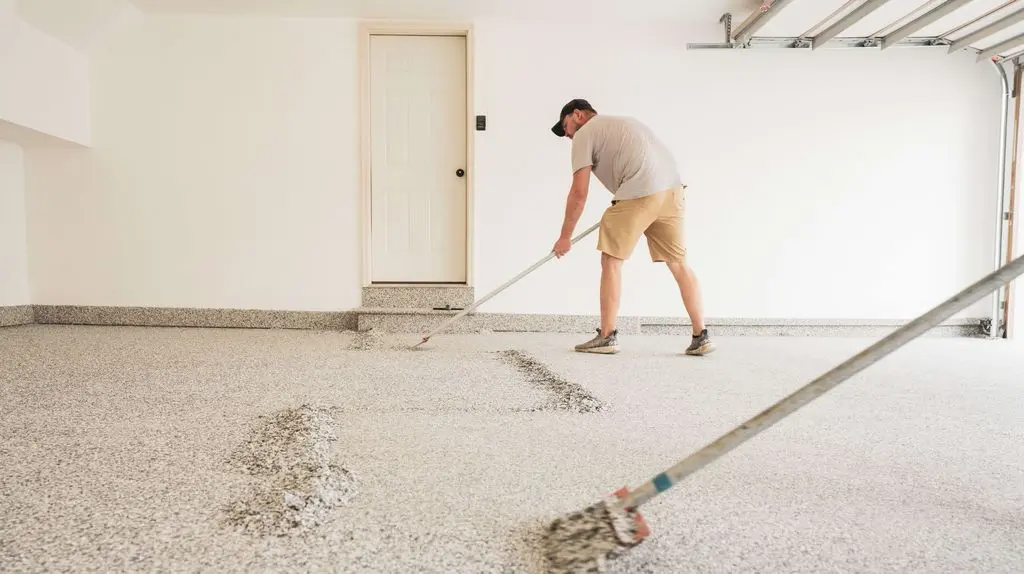
Chip flooring — sometimes called flake flooring or broadcast chip — is a concrete coating system where small vinyl or quartz chips are broadcast into a wet base coat, then sealed under a protective topcoat. The result is a multi-color, textured surface that’s seamless, non-porous, and significantly more durable than bare concrete or paint.
The chips serve two purposes. Aesthetically, they create depth and visual texture that mimics natural stone — available in dozens of color blends from subtle neutrals to bold custom combinations. Functionally, they create a surface profile under the topcoat that adds grip and conceals minor imperfections in the concrete beneath.
The chips themselves aren’t what make the floor durable. The base coat and topcoat chemistry is what determines how long the system lasts and how well it holds up to Oklahoma conditions.
Why the Base Coat Chemistry Matters
Standard chip flooring systems use an epoxy base coat. Epoxy is widely used because it’s inexpensive and familiar — but it has well-known weaknesses in Oklahoma’s climate. It’s rigid, which means it cracks when the slab expands and contracts through seasonal temperature swings. It’s moisture-sensitive during application, so any vapor pressure coming up through the slab causes bubbling and delamination. And it yellows under UV exposure, which degrades the finish outdoors and in any garage with natural light.
Polyurea-based chip flooring systems solve all three problems. Polyurea is elastomeric — it flexes with the concrete through temperature changes rather than cracking against it. It tolerates moisture during application. And when paired with a polyaspartic topcoat, it’s UV stable, meaning the color and finish hold up in direct sunlight year after year.
At ICS Concrete Coatings, we use Penntek polyurea and polyaspartic systems exclusively for all chip flooring installations. It’s the reason our floors look the same five and ten years after installation as they did the day they went in.
Where Chip Flooring Works Best
Chip flooring is one of the most versatile concrete coating options available because it performs well across a wide range of environments.
Garages are the most common application. The chip finish handles vehicle traffic, oil and fluid spills, dropped tools, and the constant temperature cycling Oklahoma garages experience between seasons. The textured surface provides grip in conditions where smooth floors would be slippery. See our full range of finish options on our color and finishes page.
Basements benefit from chip flooring for different reasons. The seamless surface resists moisture from below, and the variety of color blends allows the space to feel finished rather than industrial.
Patios and pool decks work well when the topcoat is polyaspartic rather than standard epoxy. UV stability is essential outdoors — without it, the finish yellows within a season or two in the Oklahoma sun.
Commercial spaces — showrooms, workshops, and retail floors — use chip flooring for the combination of durability, easy maintenance, and professional appearance. Unlike polished concrete, chip floors hide surface imperfections and don’t require waxing or resealing.
The Installation Process
A properly installed chip floor takes one day for most residential spaces and returns to service the same day. Here’s what the process looks like from start to finish.
Surface preparation is the most critical step and the one that most determines the longevity of the result. The existing concrete is diamond ground to open the pores of the slab and create a mechanical bond profile. Any cracks, spalls, or damaged areas are repaired and ground flush. The floor is inspected for moisture vapor emission before any coating is applied. According to the American Concrete Institute, improper surface preparation is the leading cause of coating failures — which is why we never rush or shortcut this step.
The polyurea base coat goes down next, tinted to complement the chip blend being used. While the base coat is still wet, the vinyl chips are broadcast across the surface at the desired coverage density — full broadcast for maximum coverage, partial broadcast for a more speckled look. Once the base coat cures, excess chips are scraped away and the surface is cleaned.
The polyaspartic topcoat seals everything in. It cures quickly — most floors are ready for foot traffic within four to six hours and vehicle traffic within twenty-four hours. This fast return-to-service is one of the key practical advantages of polyurea and polyaspartic systems over epoxy.
How to Choose the Right Chip Blend
The color and chip blend you choose affects both the final look and the practical performance of the floor. ICS offers dozens of pre-designed blends as well as custom options, but a few principles help narrow down the choice.
Lighter blends brighten darker spaces like basements and interior garages, making the area feel larger and cleaner. Darker blends or multi-color mixes do a better job concealing tire marks, dirt, and debris between cleanings — a practical consideration for high-traffic garages. Natural stone blends (grays, tans, and browns) tend to be the most timeless and work well across different home styles. Bold or high-contrast blends are popular for showroom-style garages and contemporary commercial spaces.
Full broadcast chip coverage gives a denser, more uniform look and provides maximum surface texture for grip. Partial broadcast leaves more of the base coat color visible and creates a more speckled or terrazzo-style appearance.
Maintaining a Chip Floor
One of the reasons chip flooring is so popular with Oklahoma City homeowners is how little maintenance it requires. The seamless, non-porous surface doesn’t trap dirt, oil, or moisture — it just sits on top until you’re ready to clean it up.
Regular sweeping or vacuuming removes dust and debris. For deeper cleaning, a mop with warm water and a pH-neutral cleaner handles most situations. Avoid harsh solvents or abrasive scrubbers, which can dull the topcoat finish over time. The EPA recommends using certified safer cleaning products on sealed concrete surfaces. Chip floors with anti-slip aggregate in the topcoat also meet OSHA’s slip-resistance requirements for walking-working surfaces.
A professionally installed polyurea and polyaspartic chip floor doesn’t require waxing, resealing, or topcoat refreshes under normal residential use. With basic maintenance, the finish holds up for fifteen to twenty-five years. You can see real examples of chip flooring installations in our project gallery.
Frequently Asked Questions
How long does chip flooring last in Oklahoma City? A professionally installed polyurea and polyaspartic chip floor typically lasts fifteen to twenty-five years under normal residential use. Epoxy-based chip systems have a shorter lifespan in Oklahoma’s climate due to their rigidity and moisture sensitivity — typically five to ten years before peeling or cracking becomes an issue.
Can chip flooring be installed outdoors in Oklahoma? Yes, but the topcoat must be polyaspartic rather than standard epoxy. Epoxy yellows and degrades quickly under UV exposure. Polyaspartic is UV stable and maintains its color and finish through Oklahoma’s sun and temperature extremes. It’s the correct choice for patios, pool decks, and driveways.
How long does installation take? Most residential chip floor installations are completed in one day. The floor is typically ready for light foot traffic within four to six hours of the topcoat application and ready for vehicle traffic within twenty-four hours.
Does chip flooring hide existing cracks and stains? Cracks and spalls are repaired as part of the installation process before any coating goes down. The chip finish then covers the repaired area with a visually uniform surface. Stains in the concrete are sealed beneath the base coat and are not visible through the finished floor.
What’s the difference between chip flooring and epoxy flake flooring? The terms are sometimes used interchangeably, but the key difference is the base coat chemistry. Epoxy flake systems use an epoxy base — rigid, moisture-sensitive, and UV-unstable. Polyurea chip systems use a polyurea base with a polyaspartic topcoat — flexible, moisture-tolerant, and UV stable. The chips look similar; the performance over time is not.
Ready to Get Started?
Get your free quote today. We’ll assess your space, walk you through the chip blend options, and give you a detailed proposal — no pressure, no obligation.
Or call us directly at (405) 403-4012
We serve homeowners across Oklahoma City, Edmond, Norman, Moore, Broken Arrow, Tulsa, and the surrounding areas.
Author: Steven Smith